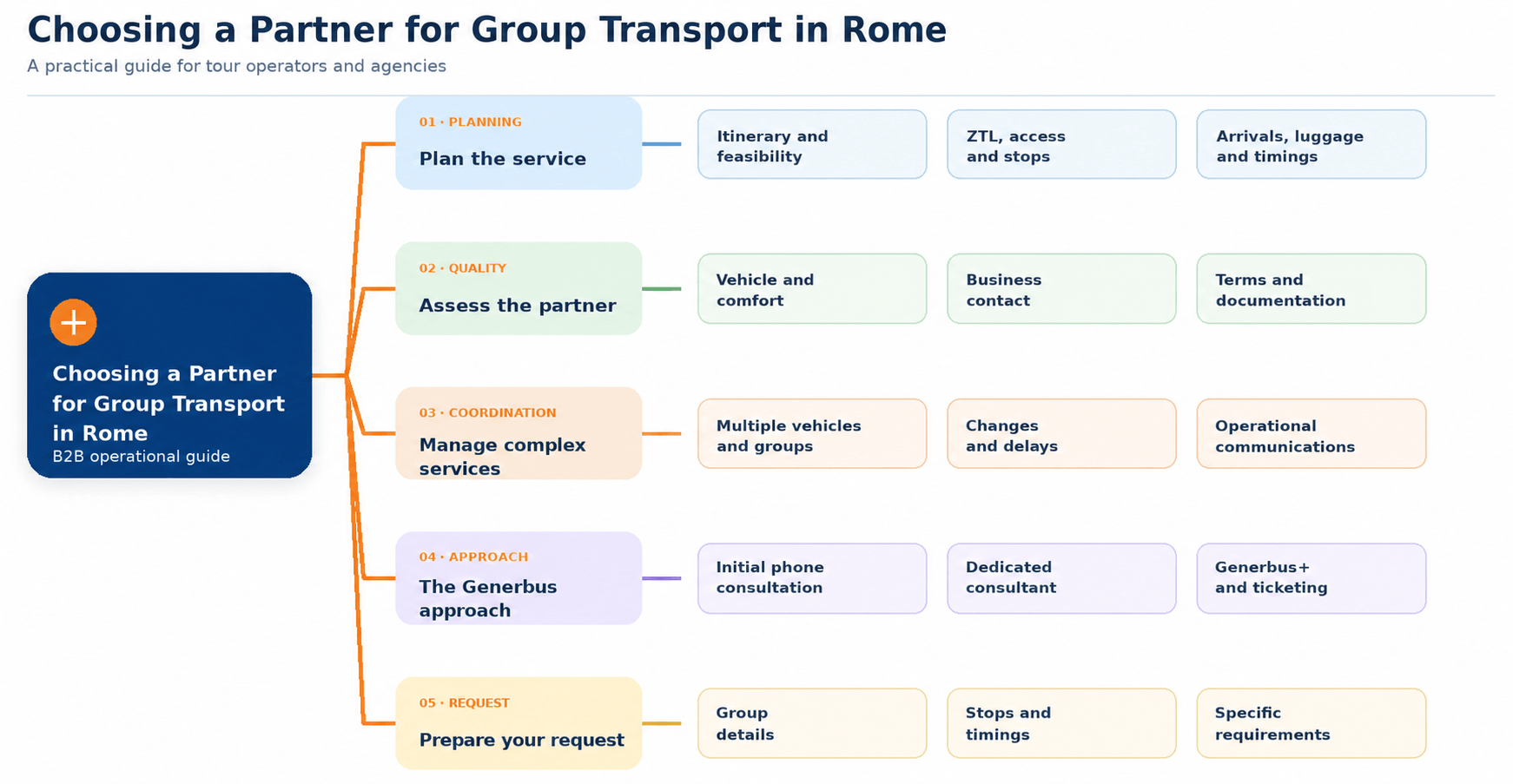
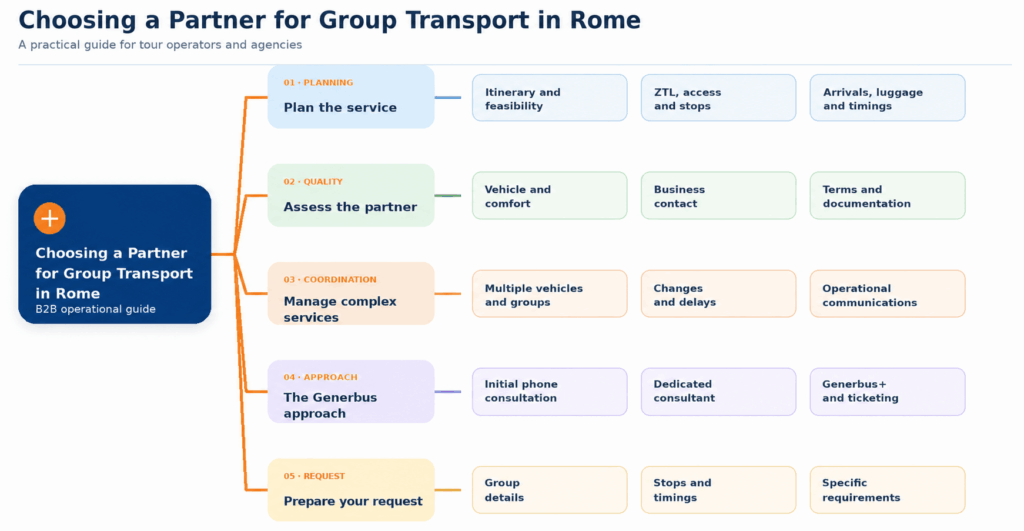
When you organise group travel, choosing a coach hire partner in Rome means assigning part of your clients’ programme to an external operator. Airport arrivals, departures, luggage, hotel check-ins, guided visits and fixed-time appointments all need to stay aligned. This becomes even more important when several groups are operating on the same day.
Price matters, of course. Before comparing figures, it is worth understanding how each supplier approaches the less visible part of the service: planning.
Transport is part of the itinerary
A group programme brings together activities with their own fixed timings: a flight into Fiumicino, hotel room allocation, a booked lunch, a guided visit, a cruise embarkation in Civitavecchia or a return transfer to the airport. The coach connects those stages. Its timing affects the entire experience your client receives.
Your first request should therefore include more than a date, passenger number and destination. A transport partner can plan more effectively when you share:
- the group’s origin and actual arrival time;
- the number of suitcases, sports equipment or oversized items;
- full hotel and venue addresses;
- timings that cannot move;
- any mobility or accessibility requirements;
- the name and contact details of the tour leader;
- the number of service days, transfers and vehicles to be coordinated.
These details allow the supplier to assess whether the service is workable before it is confirmed. They become particularly important where an itinerary includes central Rome, tight timings or several stops.
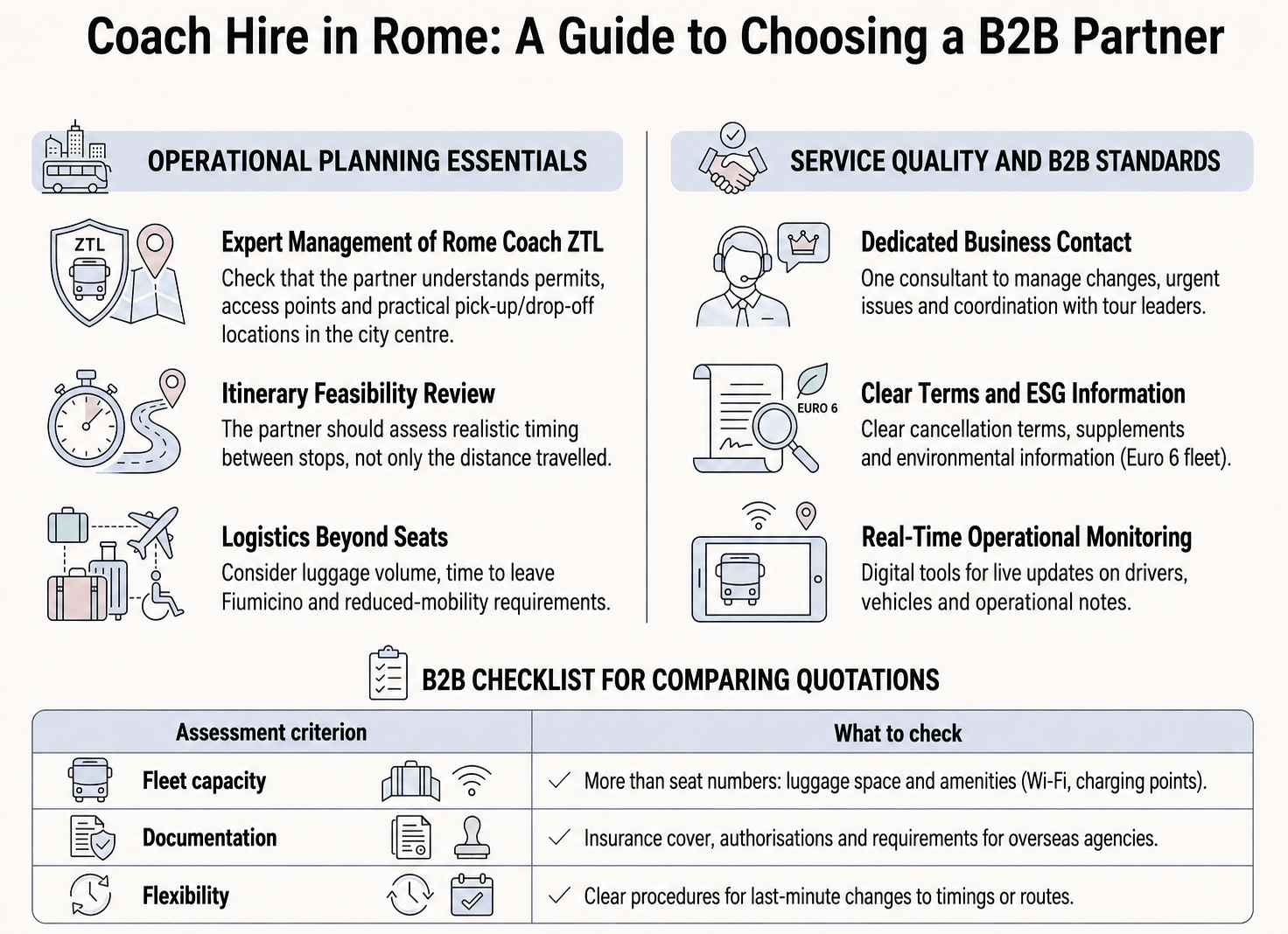
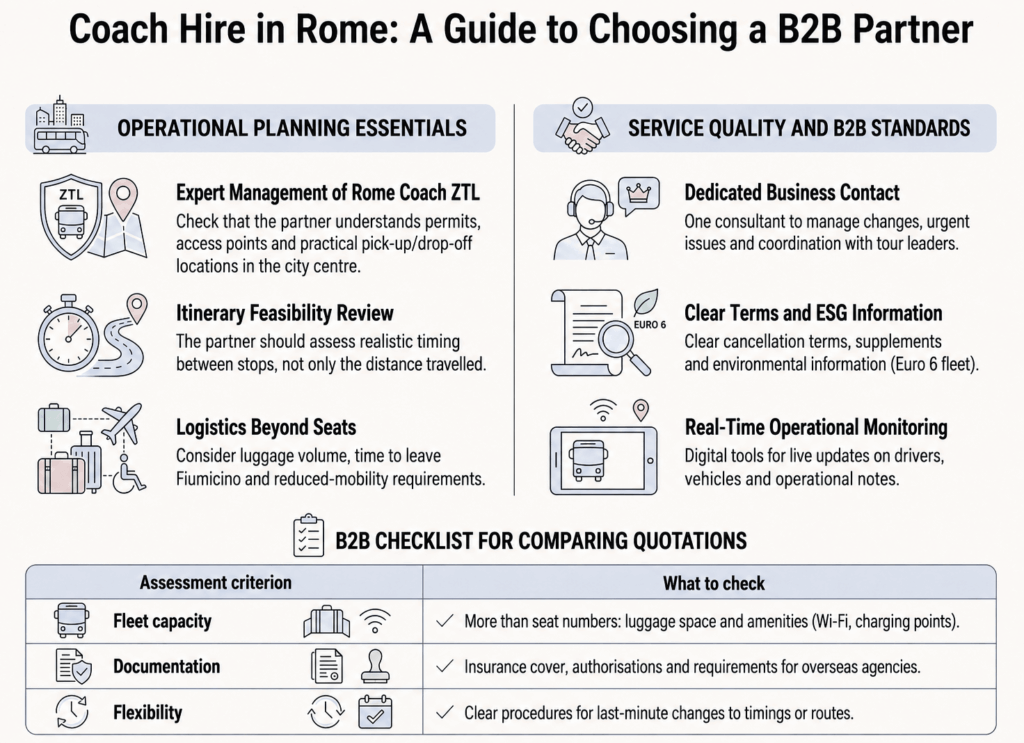
Rome coach access, restricted areas and drop-off points
Coach access in Rome needs to be discussed from the outset. Tourist coaches are subject to specific regulations, permits and restrictions. A landmark may be in the city centre, but that does not mean a coach can stop in front of its entrance.
For each stage of the itinerary, you need to consider the drop-off point, the group’s walking route, the later pick-up point and the time required to reach the next activity. These are planning decisions, not details to solve on the day.
If the programme includes Piazza Navona, the Colosseum, the Vatican, Trastevere or other areas with complex access arrangements, provide the stops in chronological order and ask the supplier to assess the itinerary as a whole. A local transport partner should identify practical constraints before confirmation, when there is still time to revise the programme.
For a more detailed explanation of permits, access rules and coach restrictions, see Generbus’ guide to Rome coach access and tourist bus regulations.
Three common operating scenarios
Arrival at Fiumicino: the transfer starts after landing
A group lands at Fiumicino at 10.30. The programme includes a hotel transfer, luggage drop-off, lunch and an afternoon visit. The flight’s scheduled arrival time alone does not define the coach departure time.
Between landing and the group’s meeting point, there may be passport control, baggage reclaim, time to assemble the group, a meeting with the tour leader and the walk to the designated coach area. The required margin changes according to flight origin, group size, season and luggage volume.
When requesting an airport transfer, share the next stages of the programme as well. This allows the transport partner to discuss a sensible time buffer and the right operational solution with you.
A city tour with several stops
A day in Rome may include hotel departure, a guided visit, lunch, museum transfer, free time and a return to the hotel. The sequence looks straightforward on paper. In practice, it depends on the places where the coach can stop, realistic driving times and the walking distance between the vehicle and each point of interest.
Local experience matters here. Reviewing the full day rather than quoting individual transfers separately makes it easier to understand whether the itinerary is sustainable and where additional time should be built in.
Good planning also prevents the tour leader from having to chase updates between driver, guide and agency during the day.
Several coaches, several groups, several variables
A corporate event, congress or multi-day tour may require several coaches, staggered schedules and different points of contact. Fleet availability is only the starting point.
Before confirming the service, ask how vehicles, passenger lists, drivers, tour leaders, operational notes and changes will be coordinated. You should also know which channel to use for a variation and who is responsible for acknowledging it.
As the number of people involved increases, the way information is managed becomes part of service quality.
How to assess a transport partner for group travel
Itinerary review
The first criterion is the work done before confirmation. A supplier may respond quickly to a standard request. For group services, a useful response often requires a few more checks.
Look at whether the provider asks about stops, timings, group profile and operational constraints. This is a good indication of the planning support you are likely to receive later.
Coaches, minibuses and group comfort
Vehicle choice depends on more than passenger numbers. A full-size touring coach may be appropriate for longer journeys, multi-day tours or groups travelling with substantial luggage. In other cases, a minibus or several smaller vehicles may fit the itinerary better.
When comparing suppliers, ask about:
- actual available capacity, not only theoretical seat numbers;
- space for luggage and equipment;
- the proposed vehicle configuration;
- equipment available on that specific vehicle, such as a toilet, Wi-Fi, charging points or reclining seats;
- vehicle year, emissions class and other relevant fleet characteristics.
Specifications can vary between vehicles. Where they matter to the group, they should be stated clearly in the quotation.
A Business contact and operational responsibility
For a complex service, it is useful to have a Business consultant or operational contact who knows the request, stays in contact with your team and directs service-related communications.
That does not mean every change can be accepted at any time. It means that there is an identified person or team and a defined process for handling requests.
If you work with international clients, confirm the languages in which the team can support your contacts. Driver language skills should also be requested and confirmed for the specific service rather than assumed as standard.
Changes, cancellations and commercial terms
A sound B2B quotation includes more than a price. It should make the terms that affect the trip and your relationship with the end client easy to understand.
Before accepting an offer, ask for clarity on:
- payment and invoicing terms;
- any deposit, advance payment or guarantee required;
- quotation validity;
- cancellation conditions;
- changes to date, time, route, passenger numbers or vehicles;
- supplements, waiting time, tolls, permits and other applicable costs;
- how variations are communicated and confirmed.
These points let you compare quotations that may look similar at first glance but are based on different conditions.
Insurance, compliance and supplier documentation
When you work with overseas agencies, corporate clients or event organisers, you may need to qualify a transport supplier on documentary grounds as well.
You can ask for information about relevant authorisations, insurance cover, vehicle inspections and other requirements applicable to the service. Requesting these details early avoids delays when the end client asks for documents close to departure.
An organised partner should be able to explain what documentation can be made available and who can provide any necessary clarification.
Accessibility and passengers with reduced mobility
Accessibility requirements belong in the initial planning stage. Passengers with reduced mobility, wheelchairs, walking aids, children, sports equipment or oversized luggage can affect both vehicle choice and the route.
Share these requirements when you make the request and ask for a specific response on the proposed solution, any limitations and the information needed to organise the service. A generic statement such as “accessible vehicles available” is not enough: the answer should relate to the actual vehicle and the individual requirement.
Euro 6 fleet and environmental reporting
Agencies and companies with environmental policies or ESG requirements increasingly ask about the fleet used and its emissions standards. Generbus operates a Euro 6 fleet. If your client requires environmental information, raise the subject while defining the service.
Generbus+ also collects carbon-saving data. When this information is needed for reporting, tenders or client communication, ask in advance about the scope of the calculation and the data available. Environmental data is useful when its meaning and method are clear.
The Generbus approach
After receiving a request, Generbus asks for a telephone contact. There is a practical reason for this. A form gathers essential information, while a short conversation can clarify the points that make the difference to the service: luggage, timings, access restrictions, group profile, fixed appointments or changes to the programme.
Each request is handled by a team with distinct responsibilities. One role manages the commercial relationship, another handles fleet availability and operational planning, while field coordination concerns drivers and service delivery. This structure allows the team to answer commercial questions — quotation, terms and availability — as well as operational ones, such as routes, access and timings.
For you, this means having a contact who understands the programme without requiring you to repeat the same request to several different people.
The dedicated Business consultant reviews the group details, itinerary and aspects requiring particular attention. Planning considers the complete service rather than simply assigning a vehicle.
During operations, Generbus uses Generbus+, a platform that brings together service, customer, passenger, destination, booking, document, operational note, driver and tour leader information. Clients can access the information made available for their service and follow updates provided by the team. Real-time updates, live monitoring and online ticketing create an organised channel for requests and communications.
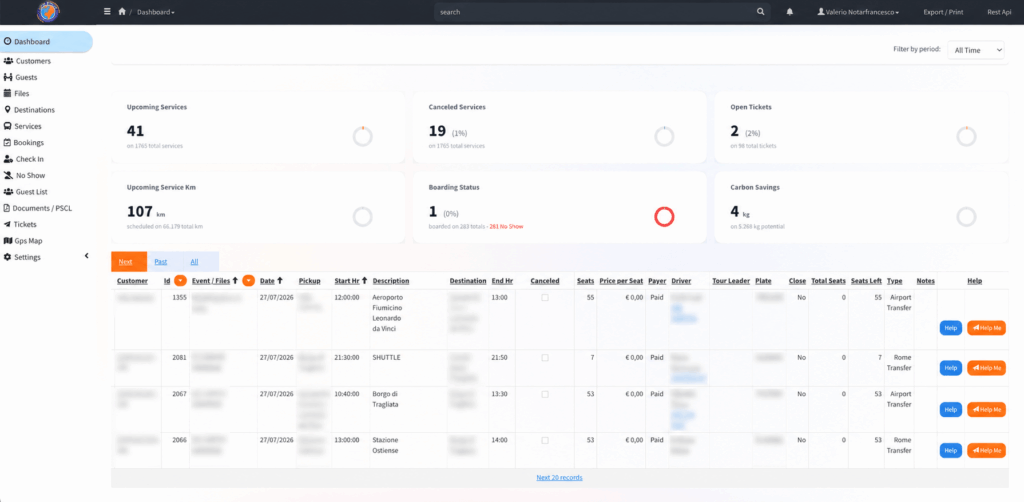
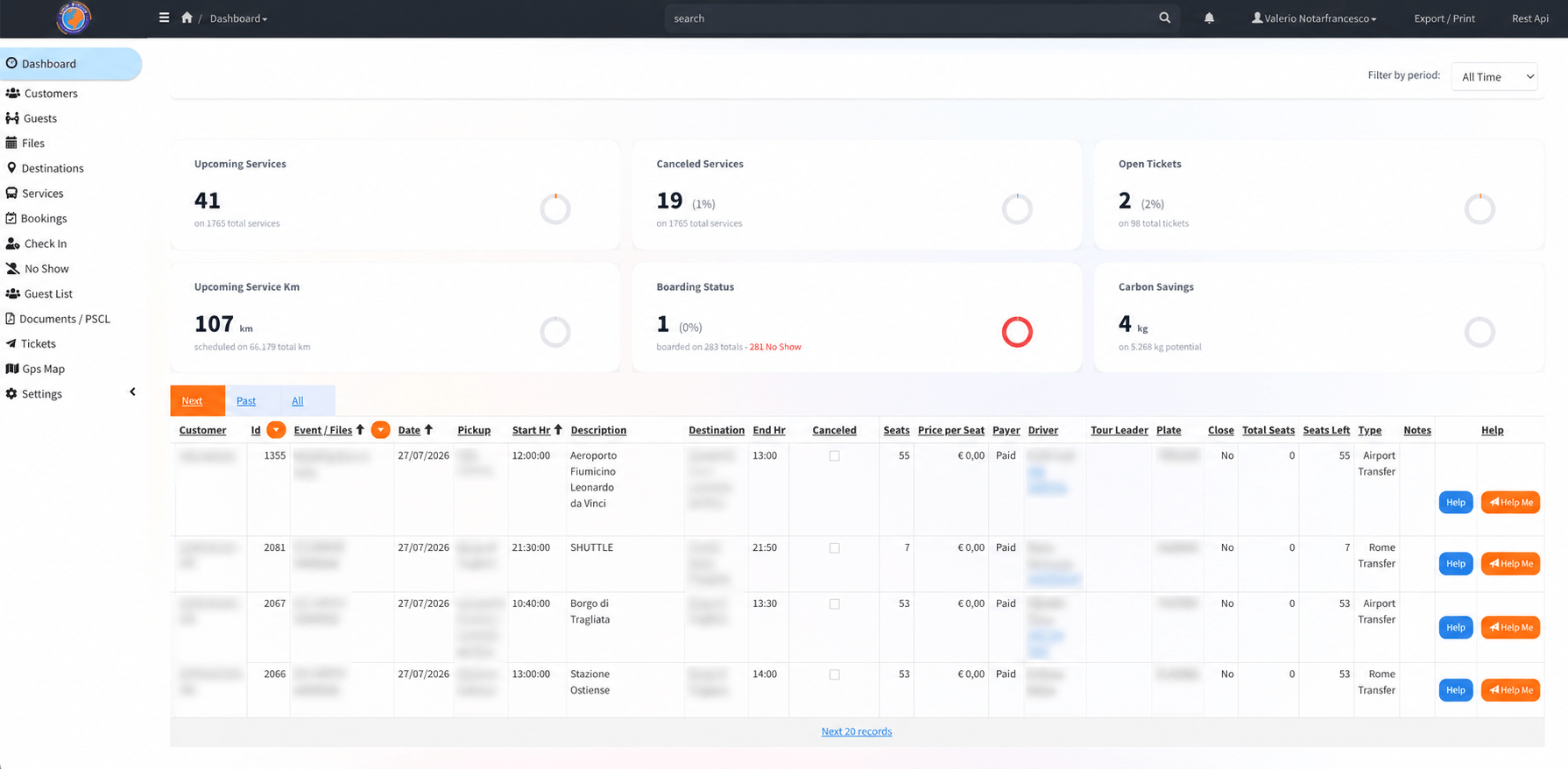
In practical terms, the team can consult information such as service time, pick-up point, destination, assigned vehicle and driver, tour leader, passenger list and booking notes within the same working environment.
The platform keeps information ordered and accessible. Coordination remains a human responsibility, but updates and communications no longer depend solely on a sequence of phone calls and emails.
Further resources for planning your service
A more complete request usually produces a more accurate quotation. In addition to the guide on Rome coach permits and restricted-access areas, useful planning resources may include:
- group transfers to and from Fiumicino Airport;
- Rome–Civitavecchia connections for cruise passengers and organised groups;
- planning multi-stop itineraries in the capital;
- luggage management and vehicle choice;
- accessibility and specific passenger requirements.
These resources help you describe the service accurately and reduce the number of points that need clarification later.
Before confirming a service
The right partner is not necessarily the one offering the lowest price or the fastest reply to an incomplete request. As a tour operator, you need a supplier that can receive information, read it in the context of the itinerary and turn it into a manageable service.
Quality is built before departure: in the questions asked, the terms stated in the quotation, the availability of a clear contact and the way information and changes are kept under control.
To review a group itinerary in Rome or discuss the transport element of your programme, contact a Generbus Business consultant.
FAQ
There is no single lead time that applies to every service. Availability depends on the date, number of vehicles required, itinerary duration, season and any access or permit requirements. For multi-day tours, events involving several coaches or programmes entering restricted areas of Rome, sharing the itinerary well in advance allows for more accurate planning.
Changes are part of managing a group. The important point is having an identified contact and a defined channel for communicating the variation, rather than contacting several people to find out who can act. The commercial and operational consequences of different changes should be clarified at quotation stage, as not every variation has the same impact.
You can request information about relevant authorisations, insurance cover and vehicle inspections for the service concerned. For international or corporate programmes, it is better to clarify these points before confirmation, avoiding last-minute document requests from the end client.
Yes. Generbus+ provides data relating to carbon savings from services operated with the Euro 6 fleet. If the information will be used for a tender, internal report or client communication, ask in advance about the calculation scope and method so that it can be used correctly.
Vehicle availability is only one factor. The operation also depends on keeping driver, tour leader and passenger-list information aligned, with a single point of contact for changes affecting the whole service rather than one vehicle alone.